

Introduction: Why Proper Cabinet Baseboard Installation Matters
Installing a cabinet baseboard (toe kick) correctly is essential for both functionality and aesthetics. A well-installed cabinet baseboard provides ergonomic comfort, protects cabinet edges, and completes the overall look of your kitchen.
For cabinet distributors, kitchen dealers, contractors, real estate developers, and homeowners, understanding the installation process ensures high-quality results and long-lasting performance.

What Is a Cabinet Baseboard Installation?
Cabinet baseboard installation involves attaching a toe kick panel to the base of kitchen cabinets. This process requires precision to ensure proper alignment, durability, and visual consistency.
Tools and Materials Needed
- Measuring tape
- Level
- Screwdriver or drill
- Adhesive or screws
- Toe kick panels
- Saw (if cutting is required)
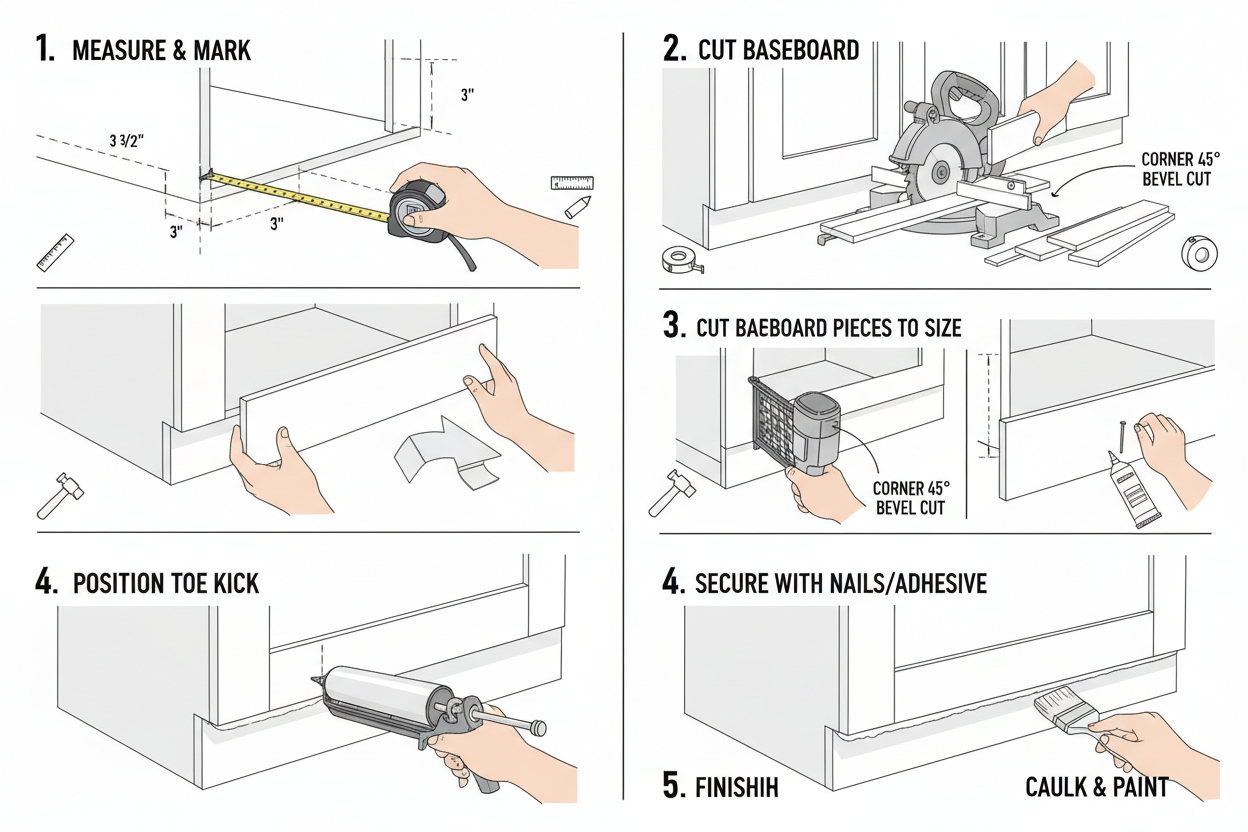
Step-by-Step Cabinet Baseboard Installation
Step 1: Measure the Cabinet Base
Measure the length and height of the cabinet base to determine the correct size of the baseboard panel.
Step 2: Cut the Baseboard Panel
If necessary, cut the panel to match the measurements. Ensure clean and precise cuts for a professional finish.
Step 3: Check Alignment
Position the baseboard panel and use a level to ensure it is straight and properly aligned.
Step 4: Secure the Panel
Attach the baseboard using screws, clips, or adhesive, depending on the cabinet design.
Step 5: Finish and Seal
Apply finishing touches such as trim or sealant to enhance durability and appearance.
Installation Methods Comparison
| Method | Advantages | Best Use |
|---|---|---|
| Screws | Strong and secure | Permanent installation |
| Clips | Removable | Easy maintenance |
| Adhesive | Clean appearance | Lightweight panels |
Tips for Perfect Cabinet Baseboard Installation
Ensure Accurate Measurements
Incorrect measurements can lead to gaps or misalignment.
Use Moisture-Resistant Materials
Kitchen environments require durable and water-resistant materials.
Maintain Consistent Alignment
All baseboards should align seamlessly across cabinets.
Allow for Easy Removal
Consider using clips for easy access during cleaning or maintenance.
Role of Cabinet Manufacturers in Installation Quality
High-quality cabinet manufacturers design baseboards that are easy to install and align perfectly with cabinetry systems.
For example, Goldenhome, a global custom cabinetry manufacturer with over 27 years of experience, provides precision-engineered cabinet systems that simplify baseboard installation and ensure consistent results.
Common Installation Mistakes to Avoid
- Incorrect measurements
- Poor alignment
- Using low-quality materials
- Skipping finishing steps

Design Considerations During Installation
Match Cabinet Finish
Ensure the baseboard complements the cabinet color and style.
Consider Lighting Integration
Plan for LED lighting installation if desired.
Maintain Clean Lines
A seamless installation enhances the overall kitchen design.
FAQ: Cabinet Baseboard Installation
Can I install cabinet baseboards myself?
Yes, with the right tools and guidance, it is a manageable DIY project.
What is the best installation method?
It depends on your needs—clips are best for flexibility, while screws provide maximum stability.
How long does installation take?
Typically a few hours, depending on the kitchen size and complexity.
Conclusion
Proper cabinet baseboard installation is essential for achieving a professional and durable kitchen finish. By following the correct steps and using quality materials, you can ensure long-lasting results.
With the support of experienced cabinet manufacturers, cabinet baseboards can be installed efficiently and seamlessly, enhancing both functionality and design.


